
The Best of H.P. Lovecraft
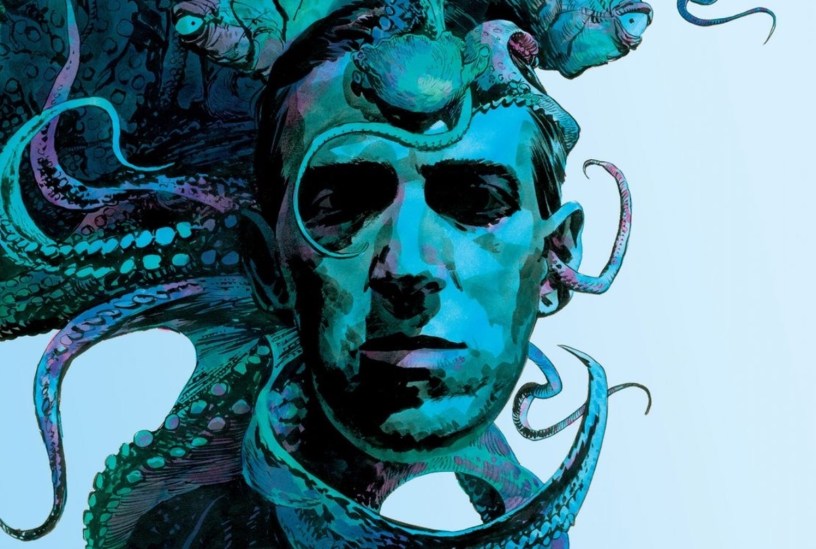
LOVECRAFT’S TOP 10 WEIRD TALES: A Personal Selection
Ok, this list is going to be biased. Unapologetically, irredeemably biased. I’ve been a Lovecraft nut since I was old enough to be genuinely disturbed by literature, and if you know me that’s probably not a surprise to you.
And yet... Lovecraft was a racist. A genuine, documented, virulent bigot whose hatred of non-Anglo-Saxon people seeped into his fiction in ways that can make your skin crawl for entirely the wrong reasons. I’m not going to pretend otherwise, and I’m not going to make excuses for him. What I will say is this — the man also happened to construct a mythology so vast, so deeply unsettling, and so philosophically strange that it essentially redefined what horror fiction could do. Those two things coexist uncomfortably, and you’re going to have to sit with that tension if you want to appreciate his work honestly.
So who was this wretched genius? Howard Phillips Lovecraft was born on August 20, 1890 in Providence, Rhode Island, and spent most of his life in New England. His childhood was marked by tragedy — his father developed a mental disorder caused by untreated syphilis when Lovecraft was around three years old, and was institutionalized in 1893, remaining there until his death in 1898.  A sickly, reclusive kid who read voraciously and barely functioned in the conventional world. He grew up to dominate the pulp periodical market, particularly Weird Tales, throughout the 1920s and 1930s.  He made his living as a ghostwriter and rewrite man and spent most of his life in seclusion and poverty. His fame as a writer increased only after his death. 
Think about that for a second. In 1936 he was diagnosed with cancer of the intestine and also suffered from malnutrition, living in constant pain until his death on March 15, 1937.  He died broke and sick, barely known outside his tiny circle of pulp magazine correspondents. The cosmic indifference he wrote about so obsessively? He lived it. There’s something almost unbearably poetic about that — or deeply tragic, depending on your disposition.
Lovecraft is the horror of insignificance. His characters encounter beings with unfathomable power, and while they mostly live to tell the tale, they suffer through an awful epiphany — that their thoughts don’t matter, their desires don’t matter, and their entire existence is temporary and fragile, a soap bubble ready to burst.  That’s his whole deal, distilled to its essence. And once you’ve really absorbed that worldview, it never fully leaves you.
Right. Here are the ten stories you absolutely need to read.
10. “The Thing on the Doorstep” (1933)
A man watches his closest friend dissolve — slowly, horrifyingly — into something that isn’t quite his friend anymore. The body horror here is almost secondary to the psychological rot, the creeping realization that the person you trusted most has been hollowed out and replaced. Lovecraft doesn’t do human relationships well, as a rule. But in this one, the friendship between the narrator and Edward Derby is oddly affecting. Maybe because you can feel it being systematically destroyed. The ending is bleak in the most Lovecraftian way imaginable — a pyrrhic act of violence that changes nothing fundamental about the darkness underlying everything.
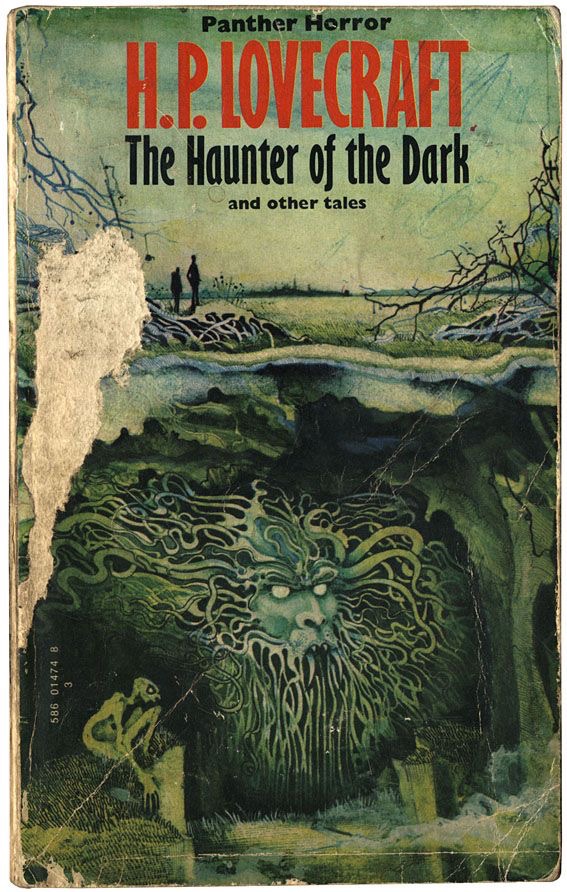
9. “The Haunter of the Dark” (1936)
Written as a tribute to Robert Bloch — who had killed off a Lovecraft-like character in his own story, so HPL returned the favor by killing off a Bloch-like protagonist here — this is one of his most atmospheric Providence pieces. An abandoned church on Federal Hill. A black windowless steeple. A jewel called the Shining Trapezohedron that lets you summon something unspeakable if you stare into it long enough in the dark. The hubris of the protagonist is almost comical in its recklessness. Almost. Because by the time the story ends, you’re too unnerved to laugh.
8. “The Shadow Out of Time” (1936)
The protagonist realizes that the Yith themselves fled their impending cosmic doom by transferring their minds across time.  That sentence alone should tell you what kind of story this is — one where the scale of horror keeps expanding until your brain genuinely struggles to hold it. A man loses five years of his life to an alien consciousness from a civilization hundreds of millions of years old, then spends the rest of his existence piecing together fragments of what that thing saw and did while wearing his body. The psychological dimension here is underrated. Identity, memory, the terrifying fragility of selfhood. Lovecraft was doing something genuinely interesting about the mind in this one, even if he buried it under geological epochs of world-building.
7. “The Case of Charles Dexter Ward” (1927)
Technically a novella, not a short story, but it earns its place. This is Lovecraft doing something almost novelistic in structure — a slow, methodical unraveling of a young man’s identity through his obsession with an 18th-century ancestor who was very much into things no one should be into. The villain, Joseph Curwen, is one of the more genuinely frightening figures in Lovecraft’s entire canon. The epistolary elements, the historical research, the Providence setting — it all clicks together with unusual precision for a writer who could sometimes let his prose sprawl into abstraction.
6. “The Whisperer in Darkness” (1930)
Rural Vermont, mysterious black prints in the mud after floods, and correspondence with a local academic who insists these things are real. This one has a slow-burn dread that’s almost unbearable by the time you reach the final act. It blends the occult with theoretical physics, exploring the frightening possibilities of other dimensions.  The Mi-Go — those fungoid, crustacean-winged things from Yuggoth who mine the hills at night — are among the most genuinely alien creatures in the Mythos. Not monsters in the conventional sense. Something stranger and more disturbing than that.
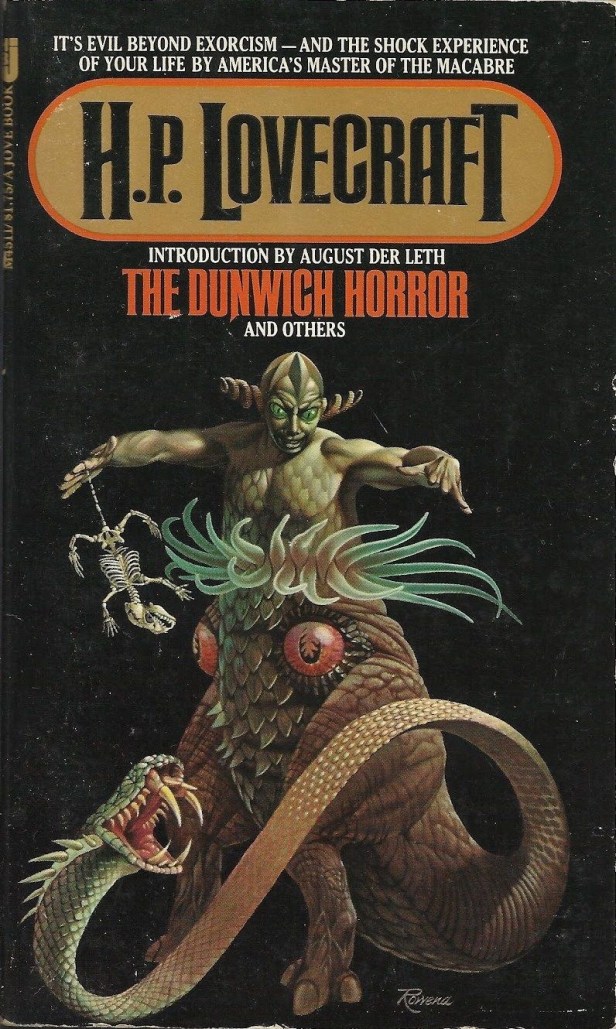
5. “The Dunwich Horror” (1928)
Pure folk horror, decades before anyone was calling it that. The Whateley family of Dunwich, Massachusetts are the kind of inbred hill people that would make Flannery O’Connor nervous — and old Wilbur Whateley is raising something in the barn that his twin brother, the invisible one, is connected to in ways that become spectacularly catastrophic. Rural New England folklore, family degeneration, and a monstrous escalation create a gripping folk-horror tale.  Lovecraft is at his most viscerally disgusting here, and I mean that as a compliment. There’s a physical horror to this story that some of his more abstract work doesn’t quite achieve.
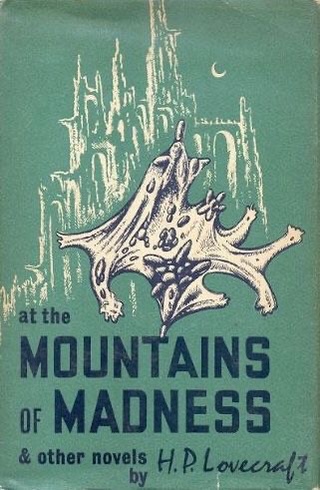
4. “At the Mountains of Madness” (1931)
The big one. The Antarctic expedition story. The discovery of the Elder Things and their cyclopean city beneath the ice. This is Lovecraft at his most ambitious — a story that takes genuine scientific concepts and warps them into something vertiginous and alien. The ambitious blend of slow-building exploration, scientific reportage, and grand cosmic history, combined with the Antarctic setting, detailed paleontology of the Old Ones, and the slow unspooling of forbidden truth, produces genuine awe and revulsion. Its scale and archaeological imagination are unmatched in Lovecraft’s output.  Stephen King tried to get a film adaptation made for years, and honestly, the reason it keeps falling apart is because no film could contain what this story does in prose.
3. “The Colour Out of Space” (1927)
A meteorite crashes near a rural farm, emitting a strange substance that has catastrophic effects on the land and its inhabitants — an incomprehensible alien force embodying the essence of cosmic horror. The genius of this story is that Lovecraft refuses to describe the colour in any terms the human mind can process. It’s not a colour we have. It defies categorization. And somehow, that conceptual move — that simple insistence on the genuinely inarticulable — makes the horror more effective than anything he could have conjured through conventional description. The Gardner family’s slow, wasting disintegration is harrowing stuff. This is the one I’d give to someone who’d never read a word of Lovecraft and wanted to understand what the fuss was about.
2. “The Shadow Over Innsmouth” (1931)
Here’s where it gets complicated. This is the story where Lovecraft’s racism is most structurally embedded — the horror is miscegenation, the monster is interbreeding, the nightmare is that you might carry foreign blood. I’m not going to pretend that subtext isn’t there, because it’s practically the text. And yet — the atmosphere of this story is extraordinary. The decaying New England port town, the lurching, fish-eyed locals, the protagonist’s growing unease as he realizes the Esoteric Order of Dagon is not simply a bizarre local cult. It succeeds emotionally through the protagonist’s final, tragic transformation — which is where Lovecraft does something genuinely brilliant. The horror flips. What you thought was your salvation might be your inheritance. That twist is one of the great gut-punches in American weird fiction.
1. “The Call of Cthulhu” (1926)
Did anyone think it was going to be anything else? It’s more than just Lovecraft’s most famous story — it’s the blueprint for modern cosmic horror. Told through fragmented newspaper clippings, personal letters, and police reports, the narrative builds a slow, creeping sense of dread as the narrator pieces together the truth: a colossal, ancient god lies sleeping beneath the ocean, whose existence poses a threat to all of humanity. The fragmented, documentary structure is just brilliantly deployed — each piece of evidence accumulating into something the narrator, and by extension the reader, genuinely doesn’t want to be true. Lovecraft once wrote: “all of my tales are based on the fundamental premise that common human laws and emotions have no validity or significance in the cosmos-at-large.”  This story is that philosophy made flesh. Or made ichor, more accurately.
This list is a primer, not a verdict. There are stories I’ve left out that deserve their own posts — “The Music of Erich Zann,” “Pickman’s Model,” “The Rats in the Walls” — and I’ll get to them eventually. But if you read these ten and your brain doesn’t feel slightly rearranged afterward, you might be doing it wrong.
If you don’t own any Lovecraft and want to fix that, I’d highly recommend the clothbound Sirius collection: The H.P. Lovecraft Deluxe Collection. Get it. Read it with all the lights on. Not that it'll help.


Comments
Post a Comment